AUTHENTICITY
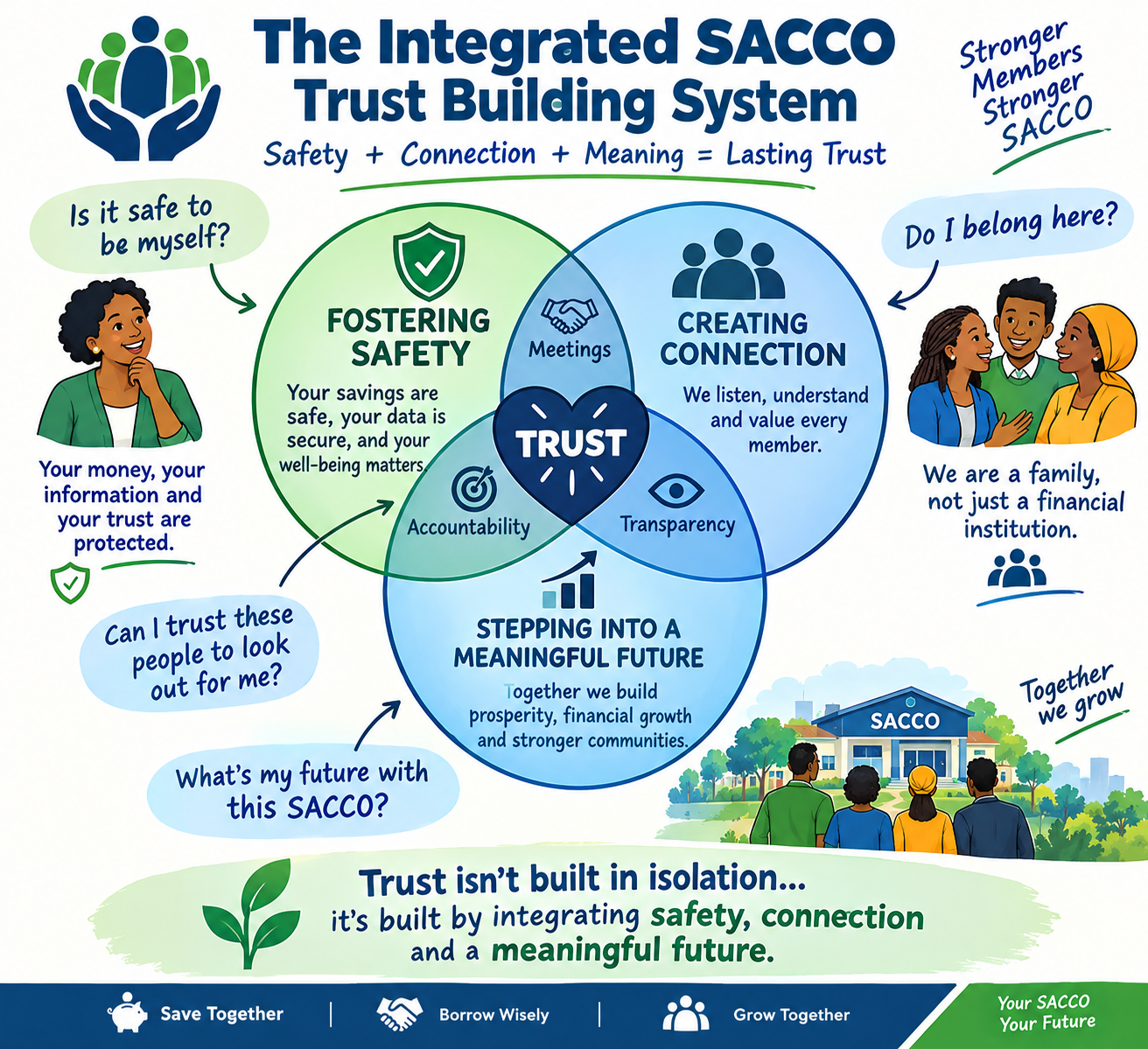
People trust when they believe they are communicating with the true you.
AUTHENTICITY IN TRUSTWORTHY LEADERSHIP
Trust is a key ingredient for a healthy, thriving community because authenticity, logic and empathy shape how people experience leadership and relationships.
People trust when they believe they are communicating with the true you.
People trust when they believe your judgement is sound and your capabilities deliver.
People trust when they feel cared for and listened to.
Trust forms the basis of many relationships and institutions. It shapes the decision to join a community, trade for goods and services, marry, cast a ballot for someone who represents our interests, rely on bylaws and contracts, trust institutions that enforce them, and make high-stakes decisions with others.
In SACCO leadership, trust gives members confidence to participate, ask questions, and work toward shared objectives.
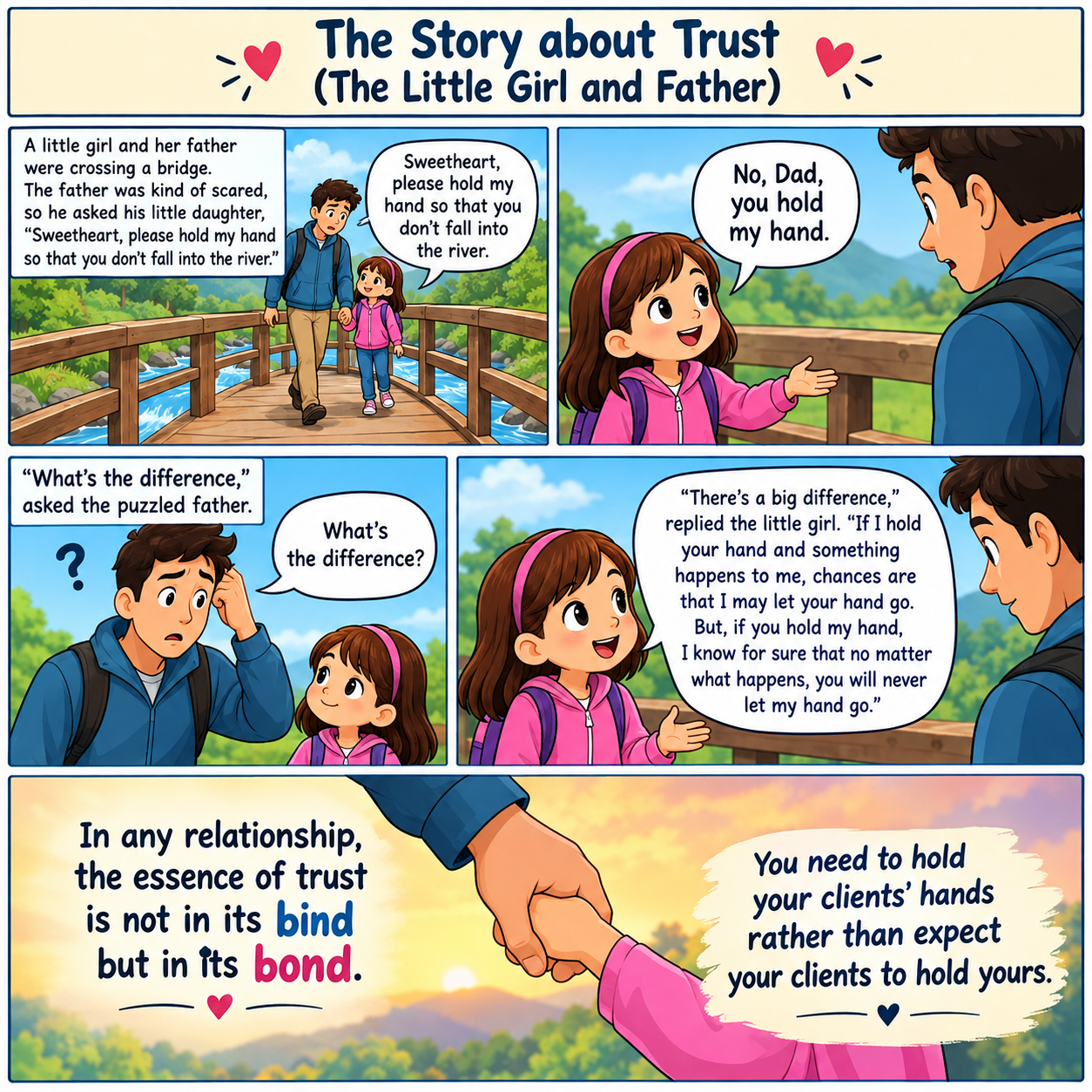
A little girl and her father were crossing a bridge. The father was kind of scared, so he asked his little daughter, Sweetheart, please hold my hand so that you don t fall into the river.
The little girl said, No, Dad, you hold my hand.
What s the difference, asked the puzzled father.
There s a big difference, replied the little girl. If I hold your hand and something happens to me, chances are that I may let your hand go. But, if you hold my hand, I know for sure that no matter what happens, you will never let my hand go.
In any relationship, the essence of trust is not in its bind but in its bond.
You need to hold your clients hands rather than expect your clients to hold yours.
Community leadership can grow from a reserved personality, analytical thinking, and taking time before decisions. Martine had previously represented the law-making community and served as vice to elected leaders.
Through service, Martine could become a source through which faith and trust in community leadership could grow.
Humble leadership is characterized by a willingness to admit mistakes, share credit for success, appreciate others' contributions, practise self-awareness, respect others, and pursue collective rather than individual success.
A humble leader is willing to take a risk on others, trusting them with the sacredness of the vision even when there is a chance of disappointment.
Humble leaders understand that the vision is bigger and will last longer than they will, so they willingly invest in others and raise new leaders.
A leader cannot be weak. Leadership brings challenges, and humble leaders learn to balance gentleness with strength.
Everyone makes mistakes. A humble leader is quick to admit when they have done wrong and deals with the fault without casting blame or making excuses.
Leadership can involve disappointment caused by the mistakes of others. A humble leader forgives easily while remembering how often they themselves have been forgiven.
A humble leader shares recognition with others and celebrates the contribution of those who helped achieve success.
A humble leader appreciates the contributions and input of others.
A humble leader understands that no one can do everything and can recognize when another person is better suited for a task.
Humble leaders do not attempt to take every important responsibility for themselves. They give meaningful responsibility and authority to the people they lead.
Humble leaders actively seek suggestions and feedback. They learn from mistakes and seek continuous improvement.
Leadership carries accountability. Leaders are expected to understand the skills within their team, the responsibilities assigned to people, the risks associated with the work, and the working relationships necessary to achieve results.
This is responsible oversight, not micromanagement.

On a stormy night, a businessman boards a plane and takes a middle seat between a middle-aged woman sitting at the window and a little girl sitting on the aisle. After the flight took off, he began a conversation with the little girl, who appeared to be the same age as his daughter. He found it strange that such a young girl would be traveling alone, but he kept his thoughts to himself.
About an hour into the flight, the plane was suddenly jolted by extreme turbulence. The pilot came over the PA system and told everyone to fasten their seat belts as they had encountered rough weather. Several times over the next half hour, the plane made drastic dips and turns, shaking all the while. Some people began crying, and many—like the woman sitting by the window—were praying intently.
The businessman was sweating and clenching his seat as tightly as he could. Meanwhile, the little girl sat quietly in her seat with her hands resting calmly on her legs. Incredibly she didn't seem worried at all.
Suddenly the turbulence ended. The pilot came on to apologize for the bumpy ride and announced that they would be landing soon. As the plane began its descent, the man said to the little girl, "You are just a little girl, but I have never met a braver person in all my life! Tell me, dear, how is it you remained so calm while all of the adults were so afraid?"
Looking him in the eyes, she said, "My father is the pilot, and he's taking me home."
While advisors and clients may never share the kind of unconditional trust a daughter feels for her father, you want your clients to trust that you will get them to their financial destinations. You can achieve that level of trust by demonstrating how well you know your clients' hopes, dreams, goals, ambitions, fears, and doubts. In other words, that you know them like a father knows his child.
The true price of leadership is the willingness to place the needs of others above your own. Great leaders truly care about those they are privileged to lead and understand that the true cost of the leadership privilege comes at the expense of self-interest.
Truth be said, being humble and building relationships is one of the most impactful things you can do to be successful in leadership. For SMACS ltd, this is where the hard miles were walked. It was never a simple walk to establish universal trust in the SACCO leadership and it had to come from demonstrating how we operate daily.
The true price of leadership is the willingness to place the needs of others above your own.
Leadership is a responsibility and privilege that requires service rather than self-interest.
Humility and relationship-building are among the most impactful elements of successful leadership. Establishing universal trust in SACCO leadership was not simple. Trust had to be demonstrated through how leadership operates daily.
Visionary leaders demonstrate resilience and adaptability. They understand that failure is not the end but an opportunity to learn and innovate. Setbacks can be used as lessons to refine strategies and approaches.
Resilience is the ability to withstand adversity and bounce back from difficult life events. It does not mean a person never experiences stress, emotional upheaval, or suffering. Instead, resilience involves working through adversity, emotional pain and suffering.
A visionary leader ensures that the vision becomes reality by stating clear goals, outlining a strategic plan and equipping and empowering members to take action at organizational, team and individual levels.

A youthful teachers' community carried energy and ambition, personal development, and a commitment to serving a schooling community. There was no quick solution. The community needed to dream deeper.
Vicent called for unity and leadership toward a shared vision.
Meet the leaders and committee members responsible for guiding SMACS and supporting its members.
Our department heads support the effective coordination and delivery of key SACCO functions.
Be genuine.
Exercise sound judgement.
Care, listen and understand.
Recognize the contribution of others.
Accept responsibility.
Build confidence through consistent action.
Learn and recover from adversity.
Turn clear goals into purposeful action.
Place the needs of others above personal interest.